
Running shoe technology: every name on the box
The shoe taken apart, part by part: what each thing actually is, whether it changes anything you will feel, and which trainers carry it. All twenty of them are in the directory underneath, one line each, with a link to the models table filtered to the trainers that carry each one. When you already know what you want the shoe to do, the buying guide on the home page starts from the other end.
The anatomy of a shoe as I read it

Each part is judged against what the shoe is actually for – the activity, the shape of the foot, the ground underneath. Every technology is shown with a few trainers that carry it, and with the cases where it does nothing for you. Very little in this industry is good at everything, and the names on the box rarely say which is which.
Upper
GORE-TEX®
see the models
A membrane between the lining and the upper: it stops water getting in and lets vapour out, though more slowly than plain mesh does. It earns its place in rain, slush and snow – and it is worth saying plainly that a waterproof shoe which does fill up, over the collar, then stays full.

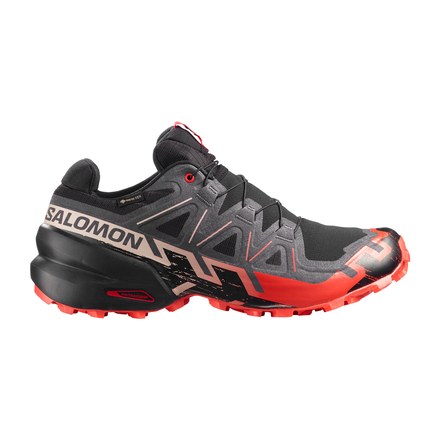
Insole
Ortholite®
see the models
An open-cell foam insole that OrthoLite makes and sells on to dozens of brands, which is why the same name turns up in shoes that have nothing else in common. It breathes better than the standard EVA insole and flattens more slowly, so the shoe keeps its feel for longer. It is a comfort layer, not a speed one – and it is the first thing to come out if you wear your own orthotics.
Midsole
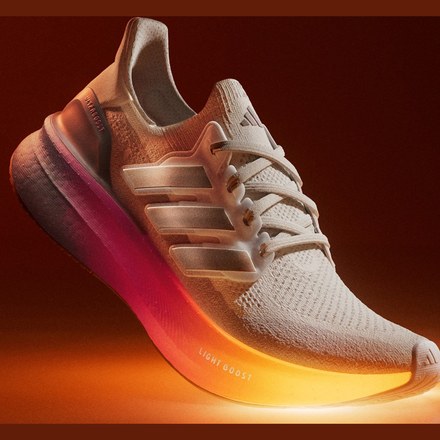
Boost / Lightstrike
see the models
Two different Adidas foams under one heading. Boost is made of fused TPU capsules: it returns more energy than almost anything else and, unusually, does not go stiff in the cold – which is worth something between November and March. It is also heavy. Lightstrike is EVA-based, lighter and firmer, meant for quicker work. Long easy miles and cold mornings favour Boost; sessions and race day favour Lightstrike.

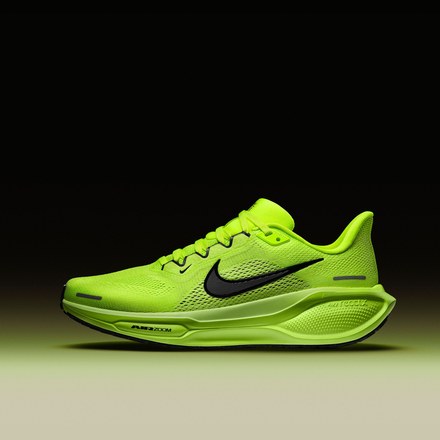
React / Air
see the models
React is the foam; Air is the pressurised gas unit. React cushions along the whole length of the sole and holds up well without packing down. Air cushions at one point, usually under the heel. In the running models what you feel is the React; on the lifestyle models the visible window is doing more for the look than for your stride.

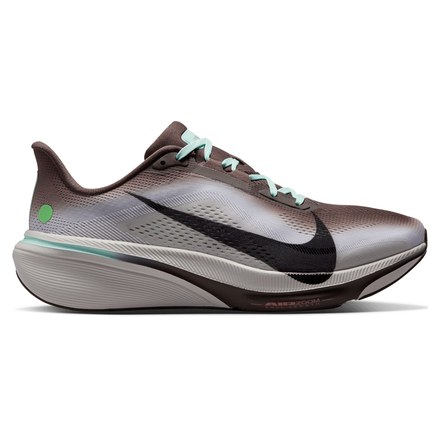

NITRO / Floatride
see the models
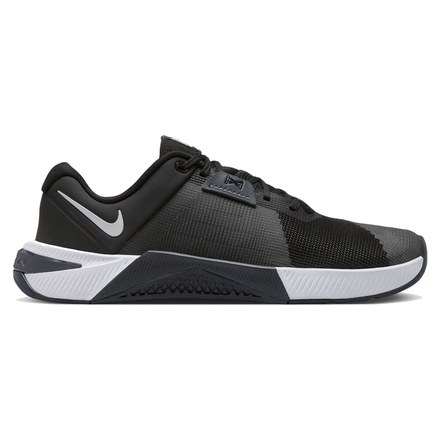
Foams with nitrogen forced into them under pressure – lighter and springier than plain EVA at the same volume. The difference shows up when you push off hard, which means when you run fast. At an easy pace the advantage over a good EVA is small, and the shoes that carry it cost noticeably more.
Meta-Rocker
see the models
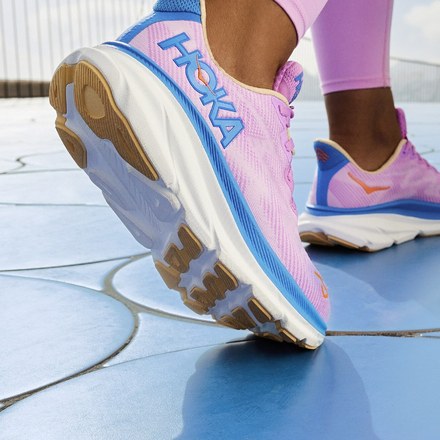
Geometry rather than material: the sole is curved like a rocking chair and rolls the foot forward for you. It saves the ankle and the calf a good deal of work over long hours on your feet, which is why it gets recommended while coming back from injury. The cost is stability – at walking pace and on uneven ground it feels tippy, and it is no use at all for side-to-side work in the gym.




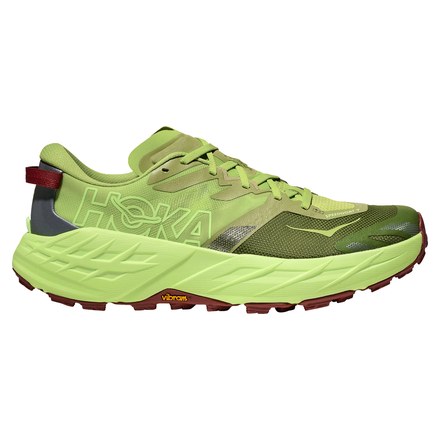
Fresh Foam X
see the models
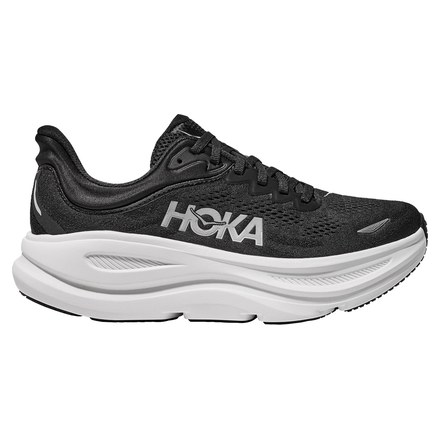
A soft, high-volume New Balance foam: it takes the impact rather than handing it back. That makes long easy miles kinder on the knees, and it suits a heavier runner particularly well. For tempo work and racing there are more responsive foams – several of them in New Balance’s own range.

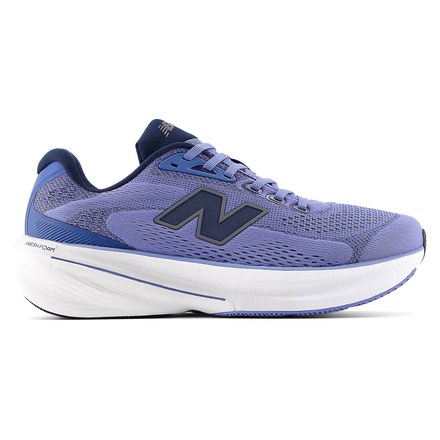
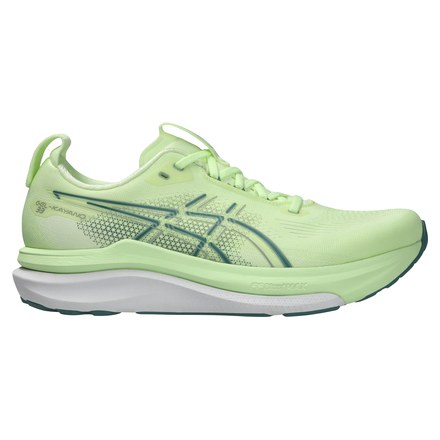
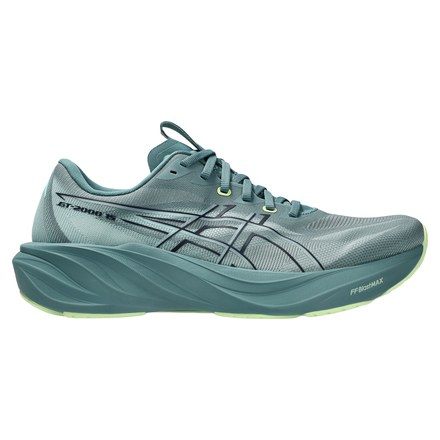
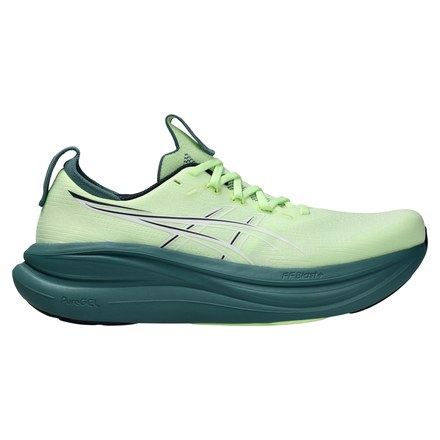
FF BLAST
see the models
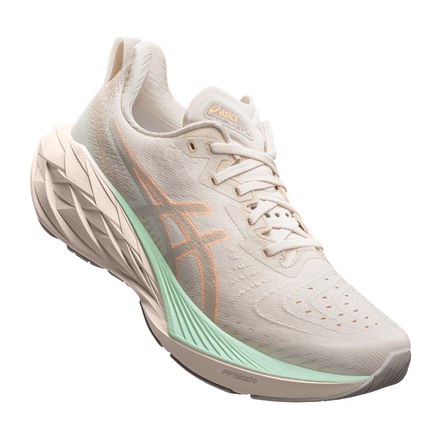
A light Asics foam with an obvious bounce, and the reason the Novablast has the following it does. It makes easy miles genuinely enjoyable. The stack is tall, though, so on a rutted path or through a sharp change of direction the shoe rolls under you.




DNA Loft v3
see the models
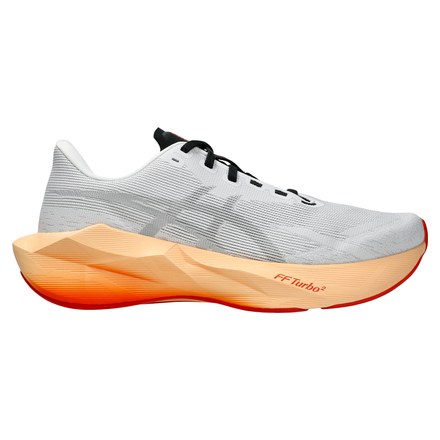
Brooks foam with nitrogen blown into it. Soft underfoot without the dead, sunken feeling that plain soft EVA gives after a few miles, which is why it carries the Glycerin and the Ghost Max. Softness is not speed: a foam this compliant absorbs more than it returns, and like every soft foam it packs down sooner than a firm one.

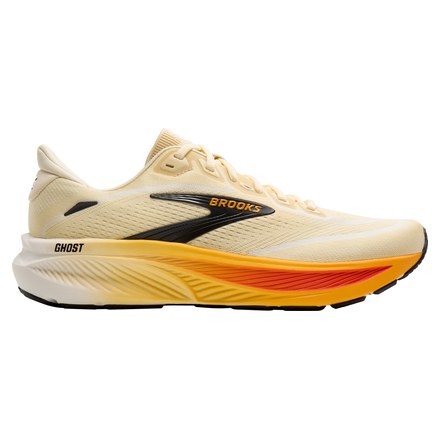

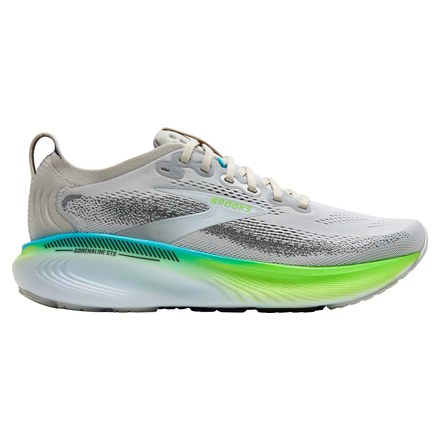
GuideRails
see the models
Not a foam at all. Two raised walls sit either side of the heel and do nothing until the heel rolls further than it should, at which point they stop it. Brooks call it holistic support because it works on the movement rather than on the arch. Worth knowing what it is not: it is not arch support, and on a gait that never over-rolls it simply never engages.
PWRRUN
see the models
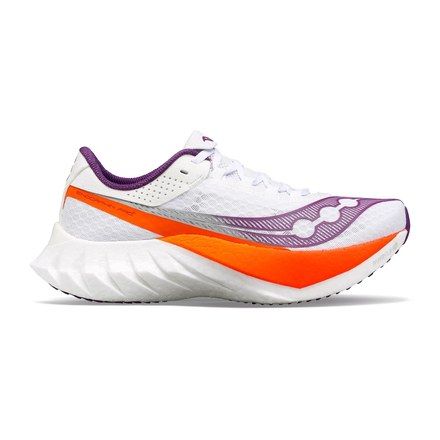
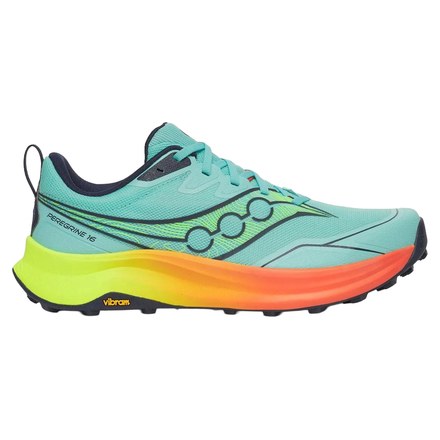
Saucony use the name for a family, not one material. Plain PWRRUN is an EVA and TPU blend, PWRRUN+ is lighter and springier, and PWRRUN PB is the PEBA in the race shoes and feels like a different shoe altogether. The name on the box therefore tells you less than it looks: check which of the three is actually in the model.


CloudTec
see the models
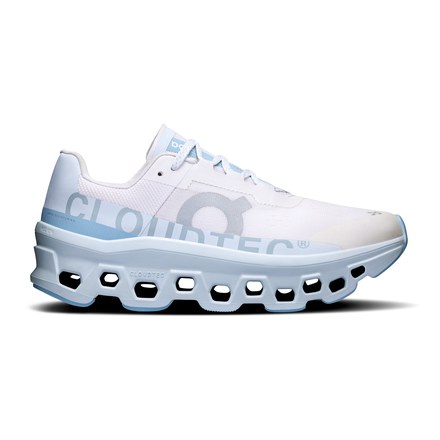
The hollow pods under an On. They collapse on landing and lock as you push off, which gives the brand its distinctive feel underfoot – people tend to either take to it immediately or not at all. The pods are open to the ground, so on gravel and trails they pick up stones, and the newer models close them off for exactly that reason.

Helion
see the models
The compound the pods are moulded from. On claim it holds its rebound across temperatures, which matters more in a British winter than the marketing suggests – most foams stiffen in the cold. Helion is a family name too, covering several versions, so it says which house the foam belongs to rather than what it does in a given shoe.
Carbon plate
see the models
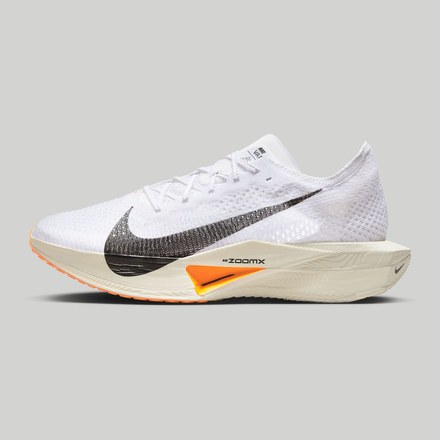
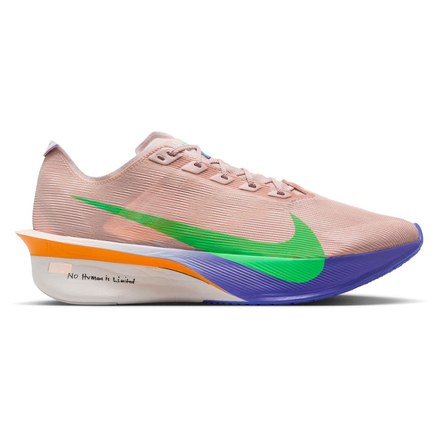
A stiff carbon-fibre sheet set inside the foam. It creates no energy – it changes where yours goes, resisting the toe joint as it bends so less of the push-off is spent folding the foot. Shoes built around one measure roughly 4% better running economy in the lab, but that figure belongs to the whole shoe, foam included, not to the plate. The cost is stiffness, which loads the calf and the Achilles differently: ease into them. World Athletics allows one plate and a 40 mm stack, which is why every race shoe stops at exactly 40.


Outsole
Continental®
see the models
A rubber compound licensed from the tyre company. The difference shows on wet tarmac, exactly where an ordinary outsole starts to let go – which, in this country, is most of the year. On dry ground the advantage is slight, and the rubber adds both grams and pounds to the price.
AHAR / AHAR+
see the models
A hard Asics rubber placed where the sole wears fastest: the outer edge of the heel and the forefoot. It adds real miles to the life of the shoe. It also weighs more than foam, which is why it appears in patches rather than across the whole sole.
The explanation stays; the shoe that carried it is no longer sold.

Waffle rubber
see the models
Nike’s original waffle pattern: square lugs that hold on tarmac and on a packed path alike. It is a genuine all-rounder, with the usual catch – in mud the squares clog, and on wet rock they slide.
The explanation stays; the shoe that carried it is no longer sold.

Durabrasion rubber
see the models
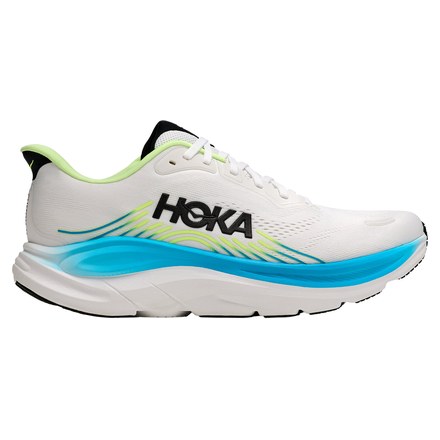
A thin rubber laid in patches over Hoka’s foam sole, only where the wear actually happens. It keeps the weight down and leaves the shoe soft. It also wears through faster than a full rubber outsole, particularly on road miles with a heel strike on the outer edge.
PUMAGRIP
see the models
Puma’s rubber, standard across the NITRO range. One of the few places where the difference is immediate: it holds on wet tarmac and on painted surfaces – underpasses, multi-storey car parks, the tiled bit outside a supermarket. The trade is a firmer feel underfoot.
Contagrip®
see the models
Not one rubber but a family of compounds and patterns, combined according to the ground the shoe is built for. On soft, churned-up trail the deep lugs dig in and hold. The same lugs on tarmac and rock wear down quickly and you feel every one of them through the sole.
The directory
The same list in one line each, grouped by the part of the shoe they sit in. Each name jumps back to its card above; models opens the table filtered to the trainers that carry it, and in depth goes to the long version where one exists.
Upper
Insole
- Ortholite®A bought-in open-cell insole used by dozens of brands. Comfort, not speed.modelsin depth
Midsole
- Boost / LightstrikeTwo adidas foams: Boost returns the most, Lightstrike weighs the least.modelsin depth
- React / AirReact is the foam that lasts; Air is a gas unit doing one job in one place.modelsin depth
- NITRO / FloatrideFoam blown with nitrogen – lighter and livelier, and it shows when you push.models
- Meta-RockerGeometry rather than material: a rolled sole that tips the foot forward.models
- Fresh Foam XSoft and deep. It absorbs the landing rather than handing it back.modelsin depth
- FF BLASTAsics’ light, bouncy foam. The stack is tall, so rough ground wobbles.models
- DNA Loft v3Nitrogen-blown Brooks foam: stays soft without the sunken feeling.models
- GuideRailsNot a foam. Two walls beside the heel that do nothing until it rolls too far.models
- PWRRUNA family, not one foam: an EVA blend, a lighter one, and PEBA in the racers.modelsin depth
- CloudTecHollow pods that collapse on landing and lock on push-off. Gravel gets in.modelsin depth
- HelionThe compound the pods are moulded from; it holds its rebound in the cold.models
- Carbon plateA stiff sheet that redirects your push. Fast, and hard on the calf at first.modelsin depth
Outsole
- Continental®Tyre-company rubber under licence. The difference shows on wet tarmac.modelsin depth
- AHAR / AHAR+Hard rubber placed only where the sole actually wears, to save weight.modelsin depth
- Waffle rubberSquare lugs: a fair compromise on road and firm path, poor in mud.models
- Durabrasion rubberThin rubber patches on Hoka foam. Light, and quick to go on tarmac.models
- PUMAGRIPOne of the few rubbers you notice immediately, and it is in the wet.models
- Contagrip®Not one rubber but a family, mixed to suit the ground the shoe is for.models
How to read this list
Most of these names describe one of three things: a foam, a rubber, or a shape. Foams decide how a shoe feels and how long that feeling lasts; rubbers decide what it holds on to and how many miles it survives; shapes – a rocker, a plate, a pair of walls – decide how your foot moves through the stride. A name that describes none of the three is usually describing a colourway.
Two names from different brands are often the same material. PEBA foam is sold as PWRRUN PB by one company and under four other names elsewhere; nitrogen-blown EVA turns up in half the range of every brand that has it. Where that is true, the card says so rather than letting the trademark do the talking.